Blind tasting is one of the most exciting experiences in the world of wine. With no labels, no visual references and no prejudices, the taster is confronted only with the essentials: aroma, taste, texture and sensations. This exercise not only tests the senses, but also allows the wine to be discovered from a purer and more honest perspective.
But what exactly is a blind tasting and how can you face it successfully? We explain it to you.
What is a blind tasting?
A blind tasting consists of tasting one or several wines without previously knowing their identity: neither the winery, nor the grape variety, nor the region, nor the price. The objective is to evaluate the wine only by its organoleptic characteristics, avoiding any external influence.
There are two common ways of doing this:
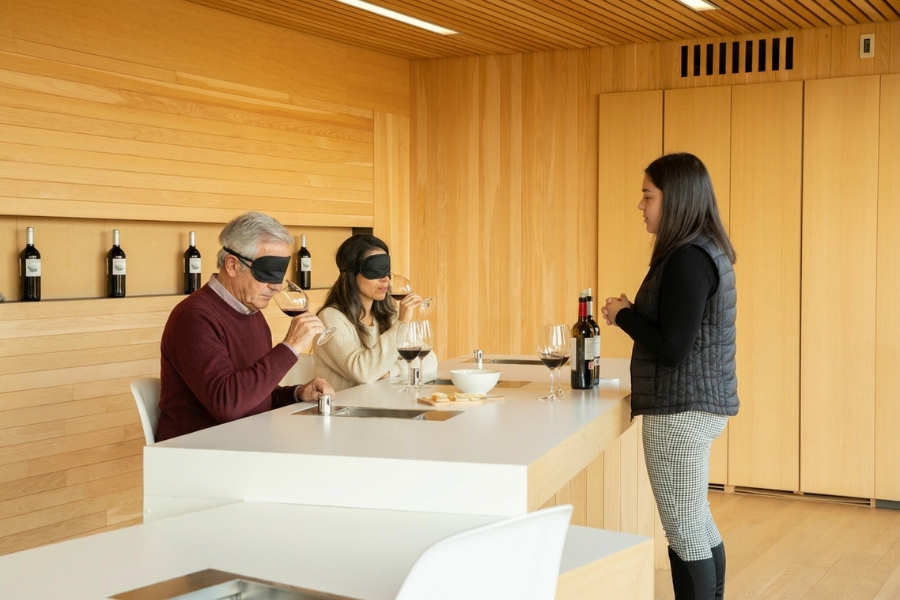
- With black glasses: these opaque glasses prevent the color of the wine from being seen, eliminating clues as to its age, variety or style.
- With blindfold or blindfold: the taster completely loses the sense of sight, which intensifies the perception of aromas, textures and flavors.
By eliminating visual references, the brain focuses on smell and taste, two key senses in the appreciation of wine. This allows us to discover nuances that, in a traditional tasting, may go unnoticed.
Why do a blind tasting?
Beyond the game and the personal challenge, blind tasting has multiple benefits:
- It allows to evaluate the wine without brand or price prejudices.
- Improves sensory memory.
- Develops the ability to identify aromas.
- It helps to better understand the style of each wine.
- Reinforces learning about varieties and regions.
It is a common practice among sommeliers and professionals in the sector, but also a very fun experience for amateurs.
Keys to success at a blind tasting
Although it may seem complicated, there are strategies that help to better interpret the wine.
1. Analyze the aromas calmly
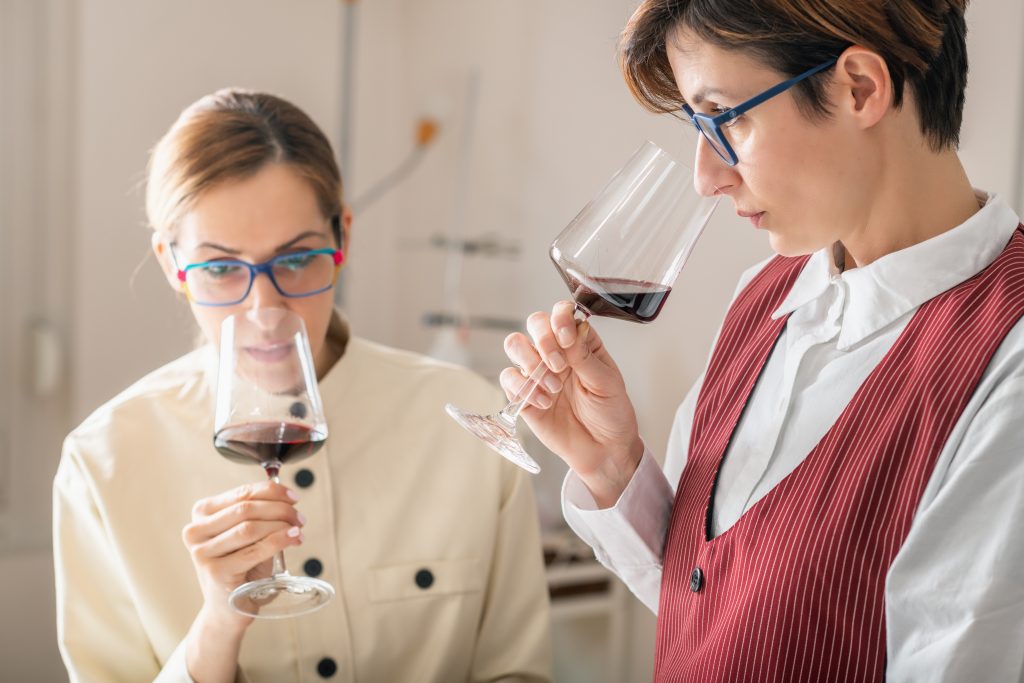
The first step is to smell the wine without haste. Try to identify aromatic families rather than specific aromas:
- Red or black fruit
- Floral notes
- Spices
- Toasted or woody aromas
- Mineral or herbaceous notes
For example, elegant and balanced wines such as Finca Valpiedra or Finca Antigua stand out for their aromatic expression and complexity, which makes them an excellent reference to train the sense of smell.
2. Observe the texture in the mouth
Without visual information, texture becomes more important. Pay attention to:
- Acidity
- Tannins
- Body
- Persistence
- Balance
Firm tannins can indicate a structured red wine, while marked acidity is usually associated with fresher or white wines.
3. Identify the style of the wine
More than getting the brand right, the goal is to recognize the style:
- Is it a young or aged wine?
- Does fruit or wood predominate?
- Is it light or structured?
- Does it have a fresh or mature profile?
A vibrant and aromatic white wine such as Finca Montepedroso can be a good example of freshness and varietal expressiveness in a blind tasting.
4. Trust your sensations
One of the most common mistakes is to try to guess rather than describe. Blind tasting is not about guessing, but interpreting. There are no wrong answers if the sensations are well argued.
5. Practice regularly
Like any sensory skill, practice is essential. The more wines you taste, the greater your ability to recognize styles, varieties and elaborations.
An experience to discover wine from a different perspective
Blind tasting completely transforms the way we understand wine. By eliminating labels and references, the experience becomes more authentic and sensory. The wine ceases to be a name or a brand and becomes a sum of aromas, flavors and emotions.
This form of tasting connects with the philosophy of many wineries that seek to express the character of the vineyard and the origin of the wine above any other consideration, as is the case with Familia Martínez Bujanda‘s projects, where each estate reflects its landscape, its soil and its identity.
Participating in a blind tasting is not only a stimulating challenge, but also an opportunity to rediscover wine from its essence. An invitation to trust the senses, learn without prejudice and enjoy wine in a different way.